

Vigilant Aerospace Demonstrates Onboard Detect-and-Avoid with New FlightHorizon PILOT Developments and Flight Tests
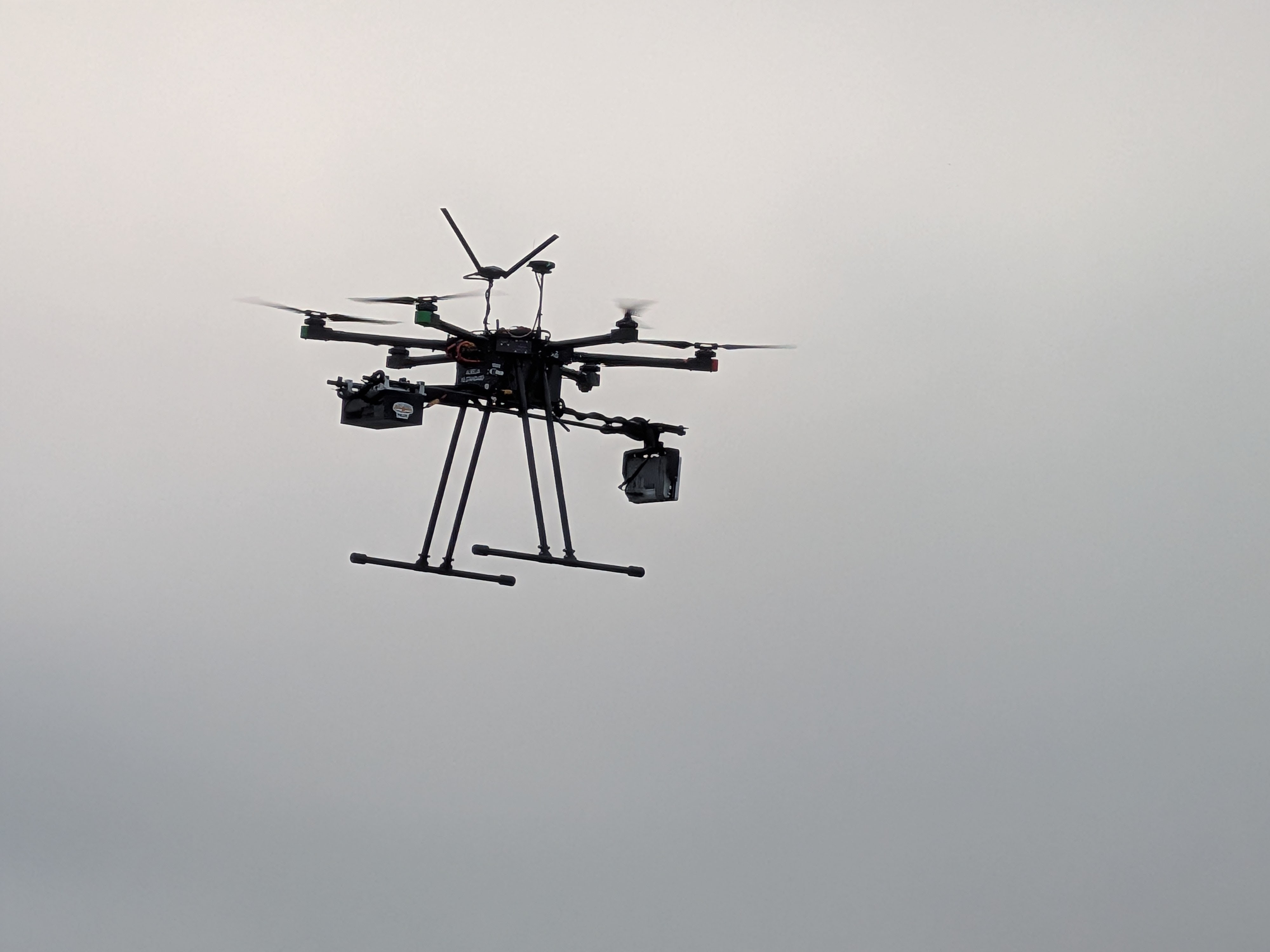
Most of the flight testing for FlightHorizon PILOT was carried out at Oklahoma State University's Uncrewed Aircraft Flight Station. While this small platform supports ongoing system development, FlightHorizon PILOT is intended for larger UAS platforms.
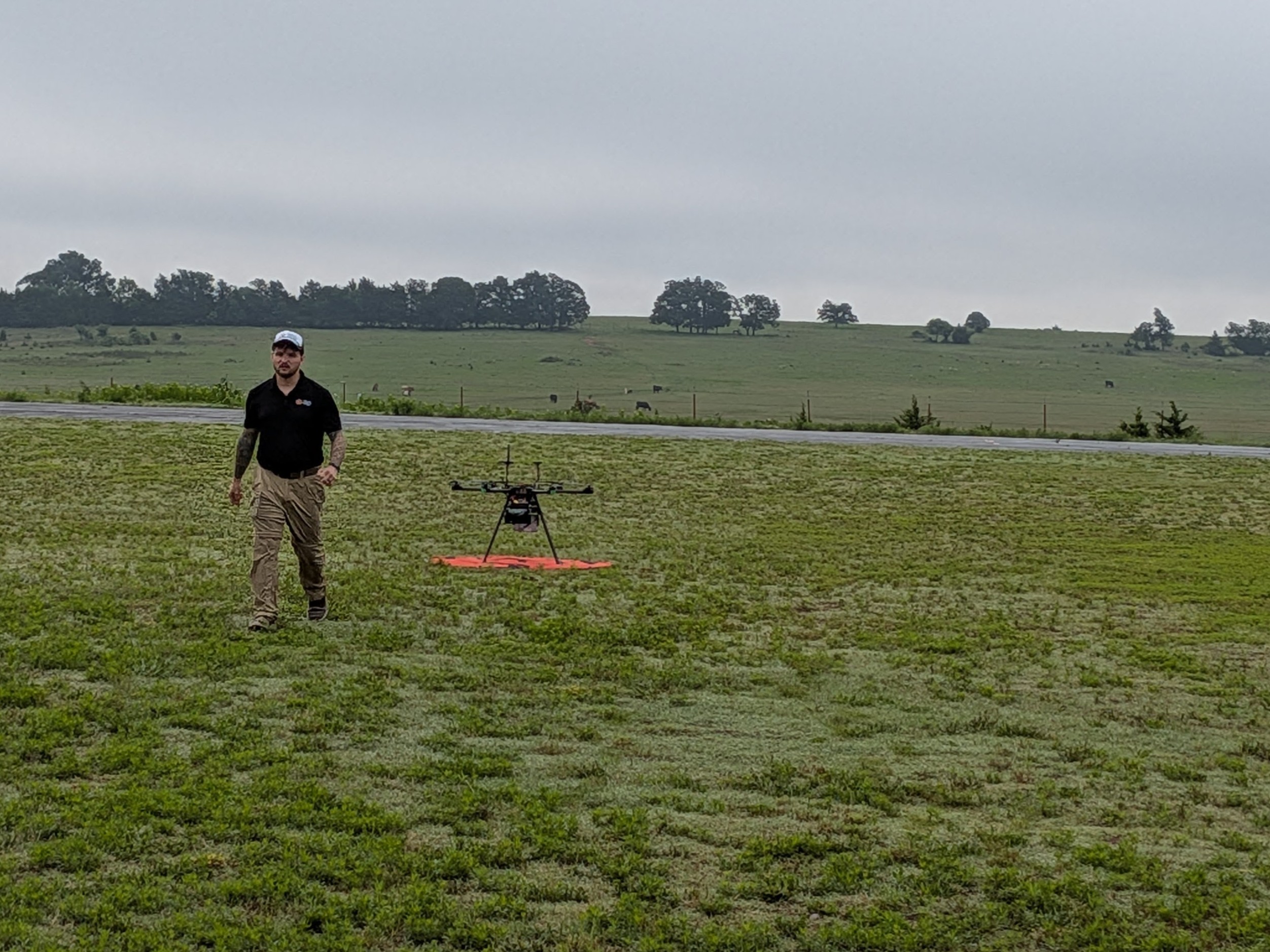
Vigilant Aerospace Director of Operations Kendyn Webster walking away from a drone being used to test FlightHorizon PILOT.
Recent tests show onboard tracking, radar integration and avoidance commands can support safer Beyond Visual Line of Sight drone flights as FAA rules advance.
The new test flights demonstrated the system’s ability to detect and track aircraft using both transponders and onboard radar and to calculate avoidance maneuvers using a low-cost, low-power onboard single-board computer. The flights also demonstrated the DAA system’s new comprehensive data logging function, radar tuning and filtering functions and a new ground-based viewer to supervise and display air traffic data received from the onboard system for remote pilots.
The system is based on two licensed NASA patents and was originally designed for the U.S. Air Force under a Small Business Innovation Research (SBIR) contract. The latest testing is focused on proving out a civilian version of the system and has been conducted with research partner Oklahoma State University’s Oklahoma Aerospace Institute for Research and Education (OAIRE), with most of the flight testing carried out at OSU’s Uncrewed Aircraft Flight Station. The work is being conducted under a $1 million contract from the Oklahoma Center for the Advancement of Science and Technology (OCAST) through its Industry Innovation Program (IIP).
“The future of aviation will largely be autonomous, which will require automatic onboard safety systems,” said Kraettli L. Epperson, CEO of Vigilant Aerospace. “The new rules and standards are emerging today that will set the requirements for integration of drones into the national airspace. Capabilities like those we are developing in FlightHorizon PILOT are designed to get ahead of the requirements and allow industry to begin planning and installing today.”
He continued, “These most recent flight test milestones help to provide a path to enabling the industry to execute safe beyond visual line-of-sight flight for both small and large UAS, with fully onboard safety systems.”
Recent testing showed FlightHorizon PILOT tracking targets in flight, calculating trajectories and issuing alerts and avoidance commands from a small, single-board computer carried onboard the drone.
Two versions of the system were tested: FlightHorizon PILOT-C for “cooperative airspace,” where aircraft carry transponders and can be tracked via a small digital radio receiver onboard, and FlightHorizon PILOT-M for “non-cooperative airspace,” where additional sensors, like radar, are required because some aircraft may not be broadcasting their position. Both versions are designed to provide detection, tracking, target correlation, and standards-compliant avoidance calculations. The newly announced test flights were conducted with a hexacopter drone and with computing and sensor equipment that meet U.S. national security supply chain requirements.
Flight testing with OSU and OAIRE is expected to move next to a larger civilian fixed-wing drone that can carry more than 60 pounds of payload over distances up to 300 miles using a gasoline engine. That class of aircraft could support longer-range missions such as firefighting, search and rescue, delivery of critical supplies and infrastructure inspection, where safe BVLOS flight is needed to make operations practical.
The project and recent flight tests are designed to provide a path to safe BVLOS flight for both small and large drones using fully onboard safety systems in accordance with the expected requirements in the FAA’s draft Part 108 beyond visual line-of-sight rules (BVLOS).
Today, most small uncrewed aircraft systems must remain within the pilot’s visual line of sight unless the operator has a waiver. Larger civilian and military drones typically require special exemptions and air traffic control coordination to fly BVLOS. The draft rules are expected to create a more routine path for low-altitude BVLOS operations, including commercial drones up to 1,320 pounds, making reliable onboard safety systems a central requirement for the next phase of drone operations.
The current work builds on prior FlightHorizon PILOT development and flight testing. The first flight tests of FlightHorizon PILOT were conducted under an FAA research contract in partnership with the Alaska Center for Unmanned Aircraft Systems Integration (ACUASI). During those early tests, the system supported flights for miles along the Trans-Alaska Pipeline with onboard radar and multiple ground-based radars under an FAA BVLOS waiver.
After those tests, development continued under a Small Business Innovation Research contract with the U.S. Air Force Research Lab. That work helped turn Vigilant Aerospace’s earlier flight tests, NASA-patented technology, collision-avoidance algorithms and simulations into an onboard safety system for larger military drones and other aircraft. The project is focused on helping these aircraft detect nearby air traffic, keep a safe distance, and avoid collisions automatically, even in busier or more complex airspace.
Projects and tests like these demonstrate FlightHorizon PILOT as a flexible onboard detect-and-avoid system for both civilian and defense applications. From lightweight cooperative detection for smaller drones to radar-enabled detection of non-cooperative aircraft for larger platforms, the system is being developed to support a wide range of aircraft classes, airspace environments, and mission requirements.
For additional information, contact River Cordova at media@vigilantaerospace.com or (405) 445-7224.
ABOUT VIGILANT AEROSPACE SYSTEMS
Vigilant Aerospace is the leading independent developer of multi-sensor detect-and-avoid and airspace management software for uncrewed aircraft systems (UAS or drones). The company’s product, FlightHorizon, is based on two NASA patents and uses multi-source data to display a real-time picture of the air traffic around a UAS and to provide automatic avoidance maneuvers to prevent collisions. Vigilant Aerospace is based in Oklahoma City.
River Cordova
Vigilant Aerospace Systems
+1 405-445-7224
media@vigilantaerospace.com
Visit us on social media:
LinkedIn
Instagram
Facebook
YouTube
X
FlightHorizon PILOT Project Summary
Legal Disclaimer:
EIN Presswire provides this news content "as is" without warranty of any kind. We do not accept any responsibility or liability for the accuracy, content, images, videos, licenses, completeness, legality, or reliability of the information contained in this article. If you have any complaints or copyright issues related to this article, kindly contact the author above.
