

Top Vertical Fermenter Manufacturer Shandong Heze Sanyi Advances Livestock Waste Treatment
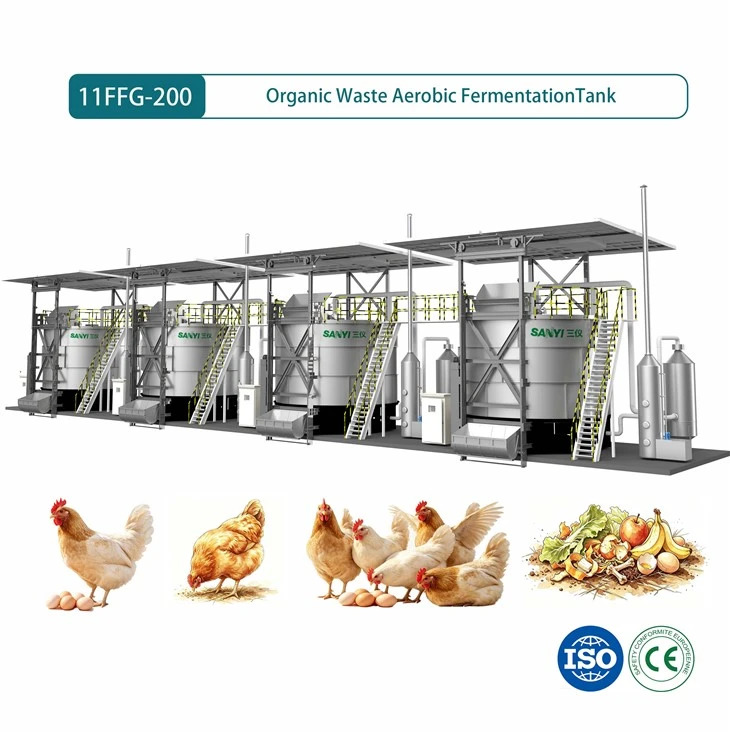
Organic Waste Aerobic Fermentation Tank
HEZE, SHANDONG, CHINA, October 14, 2026 /EINPresswire.com/ --
Shandong Heze Sanyi Biological Engineering Co., Ltd. is strengthening its presence in the agricultural environmental protection equipment sector, where livestock producers and agricultural businesses are seeking more efficient approaches to manure management, organic waste treatment, and farm biosecurity. As modern farming operations expand and environmental management requirements become more demanding, vertical fermenters and related waste-processing systems are gaining attention as practical equipment for handling livestock and poultry waste. The company supplies equipment for agricultural waste treatment, including fermentation tanks, Animal Carcass Harmless Treatment Equipment, and Supporting Equipment, serving customers looking for integrated solutions for farm waste management and resource recovery.
The market for livestock environmental protection equipment is evolving alongside the modernization of animal husbandry. Large-scale farms generate substantial volumes of manure and other organic waste that must be handled in a controlled manner. Improper treatment can create odor, wastewater, hygiene, and environmental management challenges. Equipment manufacturers are therefore expected to provide solutions that address not only the main processing stage but also material handling, ventilation, odor control, and subsequent utilization of treated materials.
Shandong Heze Sanyi Biological Engineering Co., Ltd. operates in this market through a portfolio that combines waste-treatment machinery with agricultural environmental protection technologies. Its business includes intelligent aerobic fermentation systems for livestock and poultry manure, animal carcass treatment machinery, and associated supporting equipment. This product range places the company within a sector where buyers increasingly consider the complete processing workflow rather than purchasing a standalone machine without regard to upstream and downstream requirements.
Vertical Fermenters for Modern Livestock Operations
Vertical fermenters are used in certain agricultural waste-management systems to process organic materials under controlled conditions. Depending on the equipment design, a system may regulate aeration, temperature, mixing, and processing time to support the biological breakdown of organic matter. These systems can be relevant to livestock farms, poultry operations, organic fertilizer producers, and agricultural waste-treatment facilities.
For farm operators, the choice of fermentation equipment depends on the type and volume of material being processed, moisture content, site conditions, available utilities, and the intended use of the output. A system designed for poultry manure may require a different configuration from one intended for mixed livestock waste. Daily throughput, batch capacity, material characteristics, and the level of automation all influence equipment selection.
Shandong Heze Sanyi Biological Engineering Co., Ltd. offers livestock and poultry waste intelligent aerobic fermentation tanks as part of its agricultural environmental protection portfolio. The company's published product listings include fermentation equipment designed for manure composting and organic fertilizer production. These products are intended to help agricultural customers manage organic waste through a more organized processing workflow.
The vertical configuration can be attractive where farms need to manage organic waste within a defined equipment footprint. However, the suitability of a particular unit depends on its capacity, structural design, ventilation arrangement, insulation, and material-transfer system. Buyers should review the technical specifications and operating requirements of each model before deciding whether it fits their site.
A complete assessment should also account for waste collection, loading, unloading, and storage. The fermentation tank is only one part of the process. Farms may need conveyors, lifting equipment, screening machinery, and systems for managing exhaust gases or odors. Considering these elements together can help operators plan an installation that matches their actual production conditions.
Supporting Efficient Waste Processing
Agricultural waste-treatment equipment must function within a wider operational system. Material needs to be collected, transferred, processed, and removed without creating unnecessary delays or exposing workers to avoidable risks. The design of supporting equipment can therefore influence the performance of the main processing unit.
Shandong Heze Sanyi Biological Engineering Co., Ltd. provides Supporting Equipment alongside its principal waste-treatment machinery. Depending on the project configuration, supporting equipment may include material lifting and conveying systems, feeding mechanisms, discharge equipment, odor-control units, control panels, and other components required to connect different stages of the process. Buyers should confirm the actual scope of supply for each project because equipment packages can vary according to the selected system.
For farms processing substantial quantities of manure, reliable material transfer is particularly important. Manual handling can increase labor requirements and create operational bottlenecks. Appropriate lifting and conveying arrangements may help move material between collection points, processing equipment, and storage or screening areas.
Automation can also support more consistent operation. Depending on the system, sensors and control equipment may be used to monitor operating parameters and coordinate selected processes. The degree of automation varies by model, so procurement teams should verify which controls are included and which functions require additional equipment.
Equipment integration requires careful planning. The dimensions and capacities of conveyors, feeding devices, fermentation tanks, and discharge systems need to be compatible. Electrical supply, access for maintenance, site drainage, ventilation, and safe movement of operators and vehicles should also be considered during installation planning.
For customers evaluating Shandong Heze Sanyi, this emphasis on supporting equipment is relevant because it enables discussions about the complete treatment process rather than focusing solely on the central fermenter. A well-matched equipment package can help reduce handling complexity and improve the coordination of routine operations, although actual results depend on the configuration, installation, materials, and operating practices.
Animal Carcass Harmless Treatment Equipment for Biosecurity
In addition to manure-processing systems, Shandong Heze Sanyi Biological Engineering Co., Ltd. offers Animal Carcass Harmless Treatment Equipment. This category addresses a different but closely related requirement within livestock environmental management: the controlled handling and treatment of dead animals and certain animal by-products.
Animal carcass treatment is important to farm biosecurity, veterinary oversight, and environmental protection. Farms, slaughterhouses, animal health facilities, and designated treatment centers may need equipment capable of processing carcasses in accordance with applicable regulations. The treatment method and equipment configuration depend on the type of material, processing capacity, local requirements, and the intended handling of the resulting products.
The company's published product information includes high-temperature hydrolysis and drying equipment for animal carcass treatment, as well as systems for handling livestock and poultry waste. Certain configurations incorporate closed processing, automated control, and exhaust-gas treatment components. These features are intended to support a controlled treatment process, but the exact operating conditions and performance must be verified for the specific model and application.
For buyers, capacity is a major selection factor. A small farm may require a different processing volume from a large livestock operation or a centralized treatment facility. Procurement teams should assess the expected quantity of material per batch, operating time, loading and unloading arrangements, utilities, cleaning requirements, and the available space for the equipment.
The choice of processing technology also affects how materials are handled before and after treatment. Some systems are designed to reduce material volume and enable further resource utilization, while others may form part of a broader disposal process. The intended output and its permitted use should be established according to the process design and applicable regulations.
Animal carcass treatment equipment should not be evaluated only by its nominal capacity. Buyers should also consider the control system, sealing arrangements, pressure and temperature specifications where relevant, material compatibility, exhaust treatment, safety interlocks, and maintenance access. Independent verification and appropriate operating procedures are important for ensuring that equipment is suitable for its intended purpose.
Resource Recovery and Environmental Management
Waste treatment is increasingly viewed as part of a broader resource-management strategy. Where regulations and process conditions allow, treated organic materials may be directed toward further processing or resource recovery rather than being handled solely as waste. The potential outcome depends on the incoming material, treatment technology, hygiene requirements, and applicable rules governing the resulting products.
For livestock producers, a well-designed waste-management system can help organize daily operations while supporting environmental objectives. Manure treatment may form part of an organic fertilizer production process, while carcass treatment equipment may be used in a controlled workflow for processing animal by-products. These processes are distinct and require equipment appropriate to the specific material being handled.
Shandong Heze Sanyi Biological Engineering Co., Ltd. describes its business as covering livestock environmental protection and related agricultural technologies. Its product portfolio includes fermentation tanks for manure treatment, animal carcass processing systems, and supporting equipment for integrated installations. This range allows potential customers to examine equipment options for different waste streams and farm operating requirements.
Resource recovery should be approached with realistic expectations. The final use of treated material depends on process performance, quality testing, applicable standards, and any required approvals. Equipment buyers should confirm what the system is designed to produce, what additional processing may be necessary, and which operating conditions are required to achieve the intended result.
Odor and wastewater management are also important. Depending on the site and processing method, a treatment installation may need exhaust collection, deodorization, drainage, or wastewater treatment equipment. These elements can influence the overall design and operating cost of a project. Planning them at the beginning may help avoid expensive changes after the main equipment has been installed.
Manufacturing and Project-Oriented Equipment Supply
Industrial agricultural equipment purchases often involve more than selecting a machine from a catalogue. Customers need to determine whether the equipment can handle their materials, fit the available site, integrate with existing operations, and meet relevant environmental and safety requirements.
Shandong Heze Sanyi Biological Engineering Co., Ltd. is described in its published company profile as a manufacturer of environmental protection equipment for modern agriculture. The company is associated with intelligent aerobic fermentation systems, animal harmless treatment machinery, and solar-powered solutions. Its group profile also identifies research and development, manufacturing, and technical services as part of its broader business activities.
For buyers, a project-oriented approach can be useful when treatment equipment must be matched to a particular farm or processing facility. A technical review may cover the type of waste, daily or batch volume, moisture content, required processing method, available utilities, site layout, and planned use of treated output. These details help establish a suitable configuration and clarify which supporting systems are required.
The company’s published listings describe customized equipment options for different applications. Customers should confirm the degree of customization available for each model, including capacity, material handling, control functions, and auxiliary equipment. They should also establish whether installation guidance, commissioning, operator training, and after-sales technical support are included in the quotation.
Clear project documentation can help reduce uncertainty. Technical drawings, equipment lists, electrical requirements, foundation details, operating instructions, and maintenance schedules may all be important to installation and long-term use. Buyers should confirm the scope of these documents and the responsibilities of each party before finalizing an order.
Quality assurance also deserves attention. Procurement teams may request details about materials of construction, weld quality, corrosion protection, safety controls, factory inspection, and relevant management-system certifications. Certification and compliance claims should be checked against current documentation and the exact equipment being purchased.
Serving the Needs of Modern Agriculture
Agricultural equipment manufacturers face a market in which customers increasingly consider operating efficiency, environmental performance, reliability, and long-term service requirements together. Farms need equipment that fits their scale of operation and can be maintained without excessive disruption. Centralized facilities may require higher capacity, automated material handling, and coordinated systems for managing several waste streams.
Shandong Heze Sanyi Biological Engineering Co., Ltd. participates in this market with a product range covering fermentation tanks, Animal Carcass Harmless Treatment Equipment, and Supporting Equipment. These categories address different stages of agricultural waste management and provide a basis for discussing equipment packages tailored to the needs of farms and treatment facilities.
The suitability of any installation depends on the details of the project. Buyers should assess the amount and characteristics of waste, applicable regulations, site conditions, staffing, utilities, and the required treatment outcome. They should also compare lifecycle costs, including energy use, consumables, routine maintenance, and replacement parts, rather than relying exclusively on the initial equipment price.
As agricultural production becomes more organized and environmental management remains a central operational issue, demand for specialized treatment equipment is likely to remain relevant. Suppliers that can explain equipment capabilities clearly and coordinate the main processing unit with supporting systems can help customers make better-informed procurement decisions.
For prospective customers, Shandong Heze Sanyi offers a starting point for evaluating agricultural environmental protection machinery across manure fermentation and animal carcass treatment applications. Confirming specifications, system configuration, compliance requirements, and service arrangements directly with the company remains an essential step before purchasing.
About Shandong Heze Sanyi Biological Engineering Co., Ltd.
Shandong Heze Sanyi Biological Engineering Co., Ltd. is a China-based manufacturer of agricultural environmental protection equipment and related solutions for livestock operations. Its product portfolio includes vertical fermentation tanks, intelligent aerobic fermentation systems for livestock and poultry manure, manure composting equipment, organic fertilizer processing machinery, Animal Carcass Harmless Treatment Equipment, high-temperature hydrolysis and drying systems, and Supporting Equipment for material handling and treatment processes. Related equipment offerings include feeding and lifting systems, conveyors, discharge mechanisms, odor-control components, exhaust-gas treatment systems, and control equipment, depending on the selected configuration. The company is also associated with livestock wastewater treatment solutions and solar-powered applications within its broader business profile. Its equipment serves farms, livestock and poultry operations, and other agricultural facilities seeking to improve waste handling, biosecurity, and environmental management. Buyers should contact the company to confirm current product models, processing capacities, technical specifications, customization options, installation requirements, certifications, and after-sales support. For further information, visit www.hzsysam.com.
Address: No.1118 Lanzhou Road, High-tech Zone, Heze City.
Official Website: https://www.hzsysam.com/
Shuang Song
Shandong Heze Sanyi Biological Engineering Co., Ltd.
business@hzsysam.com
Legal Disclaimer:
EIN Presswire provides this news content "as is" without warranty of any kind. We do not accept any responsibility or liability for the accuracy, content, images, videos, licenses, completeness, legality, or reliability of the information contained in this article. If you have any complaints or copyright issues related to this article, kindly contact the author above.
